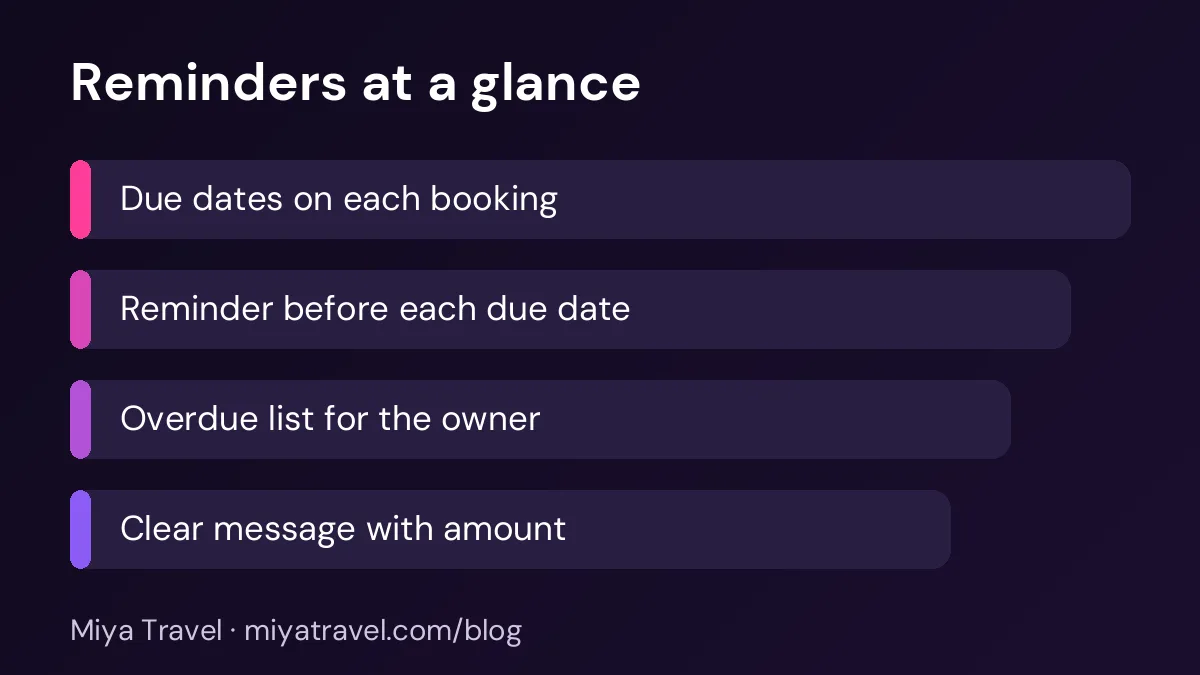
A travel CRM with payment reminders keeps each balance due date on the booking, sends a reminder before the date and flags overdue amounts for the owner. Agencies use this to collect advances and balances on time, without chasing clients by memory.
A travel agency can have a good month for bookings and still struggle with cash. The reason is often the balance. Clients agree to pay the balance before departure, but the reminder is sent late, or nobody sends it at all, and the money arrives after the trip has started. A travel CRM with payment reminders keeps every due date on the booking and makes sure the right person follows up in time.
This guide explains how to set up payment reminders, what each message should say and how to avoid the habits that slow down collections.
Why balances are collected late
Balances are often collected late for simple reasons. The client forgot the date, the message was unclear, or the agency waited for the client to call. Many agencies send a reminder only when they remember, which means some clients get none at all.
Late collection is also caused by a weak payment plan. If the balance is due on the day of departure, clients may delay until the last moment. A plan with the balance due two weeks before departure gives the agency time to follow up.
Set due dates on every booking
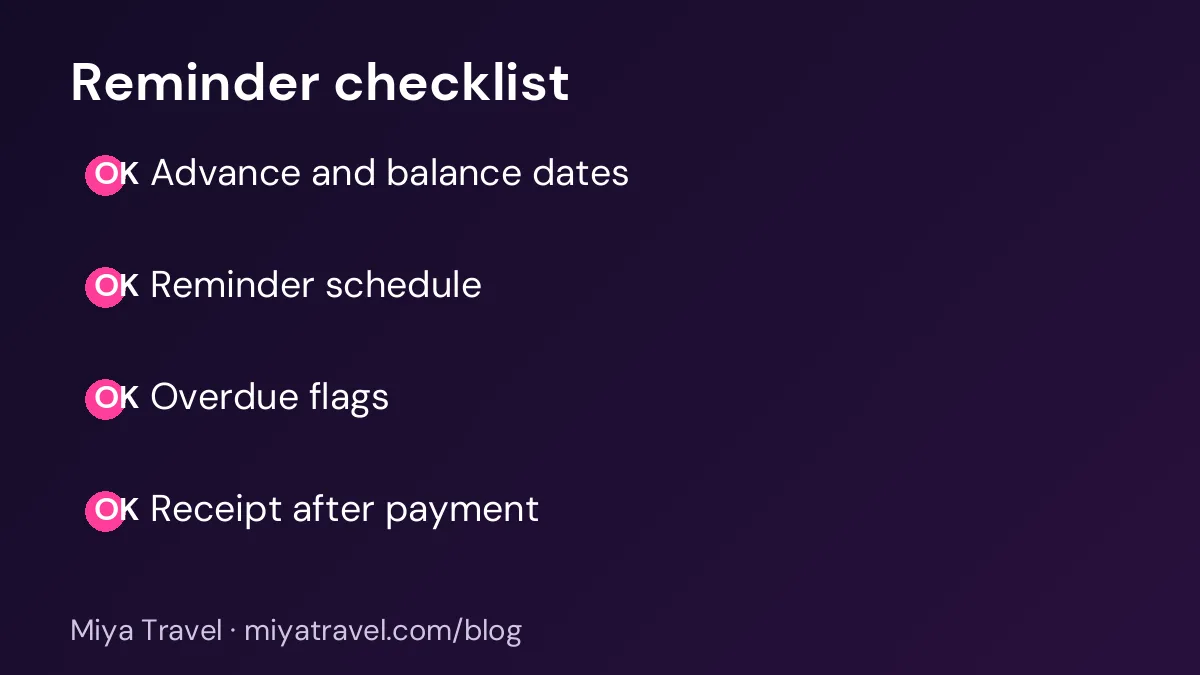
The first step is to record each due date on the booking. Include the advance, any second instalment and the final balance. Each due date should have an amount and a status, such as due, paid or overdue.
The due dates should match the payment plan in the quotation and the booking confirmation. If the client sees one schedule and the team tracks another, the reminders will confuse the client and the team.
Build a reminder schedule
A reminder schedule works best when it is consistent. A common pattern is a reminder seven days before the due date, another on the due date and one the day after if the payment has not arrived. For balances, add a call three days after the due date. Keep the schedule the same for every booking, so the team does not have to decide each time.
For large group bookings or corporate trips, the schedule may need a personal call before the first reminder. The group leader or the accounts contact often prefers a conversation.
Send the first reminder early, not on the due date. Clients who receive a reminder a week ahead usually pay on time, while those who receive it on the day often pay a few days late.
Write messages that get paid
A payment reminder should be short and clear. It should include the client name, the trip, the amount due, the due date and the payment method. A line that says "Please let us know once the transfer is done" helps the client reply.
Avoid messages that sound angry or threatening. A friendly tone works better, and it keeps the client willing to continue the relationship. If the client has a question, the reminder should invite them to ask.
Track replies and promises
When a client replies, record the reply in the booking. If the client says they will pay on Friday, set a reminder for Friday and check the account on that day. If the client asks for a payment plan change, record the agreed change and update the due dates.
Promises that are not recorded are easy to forget. A record protects both the client and the agency, and it makes the next reminder more accurate.
A weekly overdue review
Every week, the owner should review the overdue list. It should show the client, the booking, the amount and the number of days overdue. Sort by amount, so the largest balances get attention first.
Decide who will call each client and by when. A short list reviewed once a week keeps overdue balances small. Waiting until the trip is close creates pressure on both the client and the team.
Handling refunds and changes
Reminders must stop when a booking is cancelled or changed. If the client cancels, the balance reminder should be removed and a refund process should start. If the client changes the trip, check whether the due dates still apply and update them.
Sending a payment reminder for a cancelled trip is one of the fastest ways to upset a client. Make sure the cancellation updates the booking before any reminder is sent.
Common mistakes
The first mistake is relying on memory for due dates. The second is sending generic messages with no amount or date. The third is not confirming receipt of payment. The fourth is continuing reminders after the client has paid, which creates confusion. Mark the payment as received as soon as the money arrives.
Another mistake is sending reminders from different people. If the owner and an agent both message the same client, the client may feel harassed. Assign one person to each booking's reminders.
What to check in a travel CRM
Ask the vendor to show a booking with an advance, a balance and a payment reminder. The reminder should appear at the right time, the overdue list should update automatically and the payment should be recorded against the correct booking.
Check whether the tool sends the reminder itself, or whether the team sends it manually from a template. Both can work, but the team must know which one applies.
Miya Travel links leads, customers and quotations in one record, which helps the team keep the sale and the trip details together. For payment reminders, check the current features in the documentation before you rely on a specific reminder function.
A simple collection routine
Set reminders for every due date when the booking is confirmed. Review the overdue list each Monday. Call any client with a balance more than seven days overdue. Mark payments as received on the day they arrive, and send a receipt. After departure, review the collection performance and adjust the schedule if many clients paid late.
Handling clients who dispute a reminder
Occasionally a client will say they have already paid, or that the reminder was sent in error. Do not argue. Check the payment record, the bank statement and the booking first. If the payment is not visible, ask the client for the transaction reference or a screenshot, and offer to check again once it is received.
If the reminder was wrong because the system used an old due date, correct the record and apologise briefly. A short, sincere apology is usually enough, and it protects the client's trust. Note the error, so the team can check whether the same problem affects other bookings.
Keep reminders respectful even when the client is frustrated. A calm reply that explains the next step is far more effective than a defensive one. The goal is to resolve the question quickly and keep the relationship intact.
Frequently asked questions
What is a payment reminder in a travel CRM?
It is a dated alert or message that tells the team, or the client, that a payment is due. Good systems link the reminder to the booking and show the amount.
When should I send the first balance reminder?
About seven days before the due date works well for most agencies. Clients who receive the reminder early usually pay on time.
What should a payment reminder include?
The client name, the trip, the amount due, the due date and the payment method. Keep the message short and friendly.
How do I avoid sending reminders after payment?
Mark the payment as received on the day it arrives. Check the booking before every reminder, and stop reminders when a booking is cancelled.
Should payment reminders come from the owner or the agent?
Choose one person for each booking. Avoid two people messaging the same client about the same payment.