Travel agency invoice software in India creates numbered, itemised invoices for each trip, shows advances and balances, and keeps a record of every invoice sent. A clear invoice reduces disputes, supports tax filing and makes it easy for clients to pay on time.
An invoice is the document that turns a trip into a bill. For a travel agency, it has to show more than a total. The client needs to see what they are paying for, how much they have already paid and what is still due. The accountant needs the numbering and tax details to be correct. Travel agency invoice software in India helps with all of this by creating each invoice from the booking, so the numbers match the quotation and the payments.
This guide explains what a travel invoice should contain, how to set up numbering and what to check before you send an invoice to a client.
Why travel invoices need more detail
A retail invoice may list a few items and a total. A travel invoice has several layers. It may include the trip name, the travel dates, the number of travellers, the package price, the extras, the taxes or service charges, the advance already received and the balance due. Each layer helps the client understand the bill and helps the agency explain it later.
Travel invoices also change. A client may add a night, remove a transfer or change the room type. Each change should be reflected in a new invoice or a clear amendment. Without a system, the agency can end up with three versions of the same trip and no clear final bill.
What an invoice should show
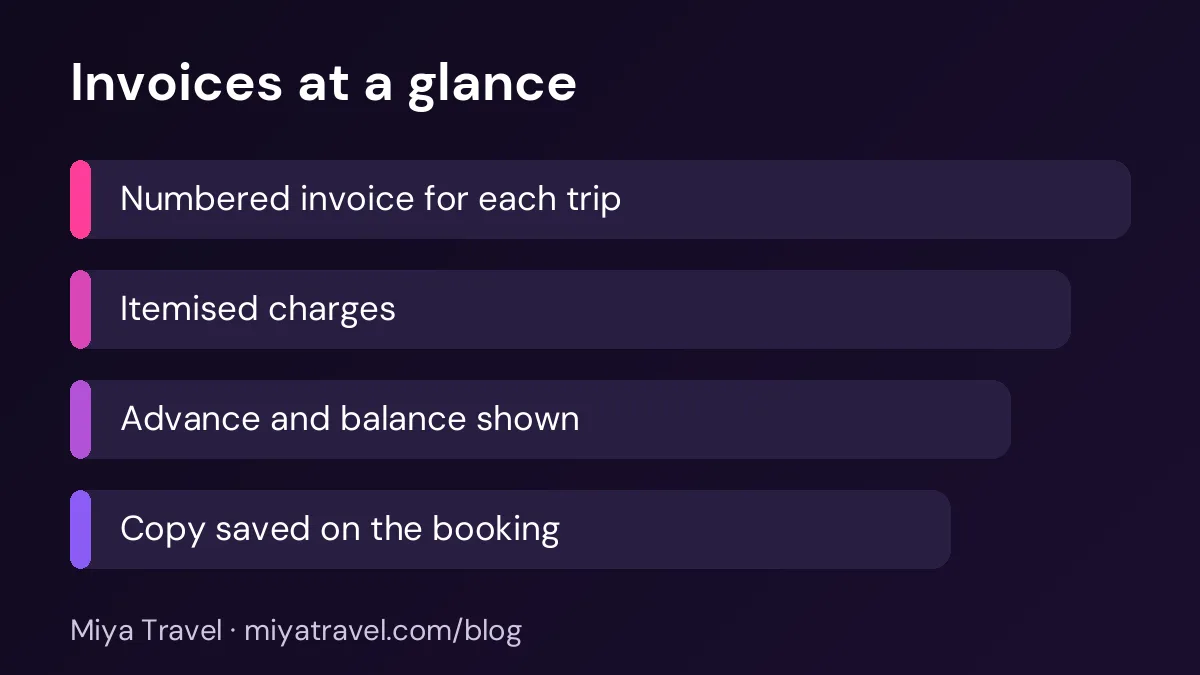
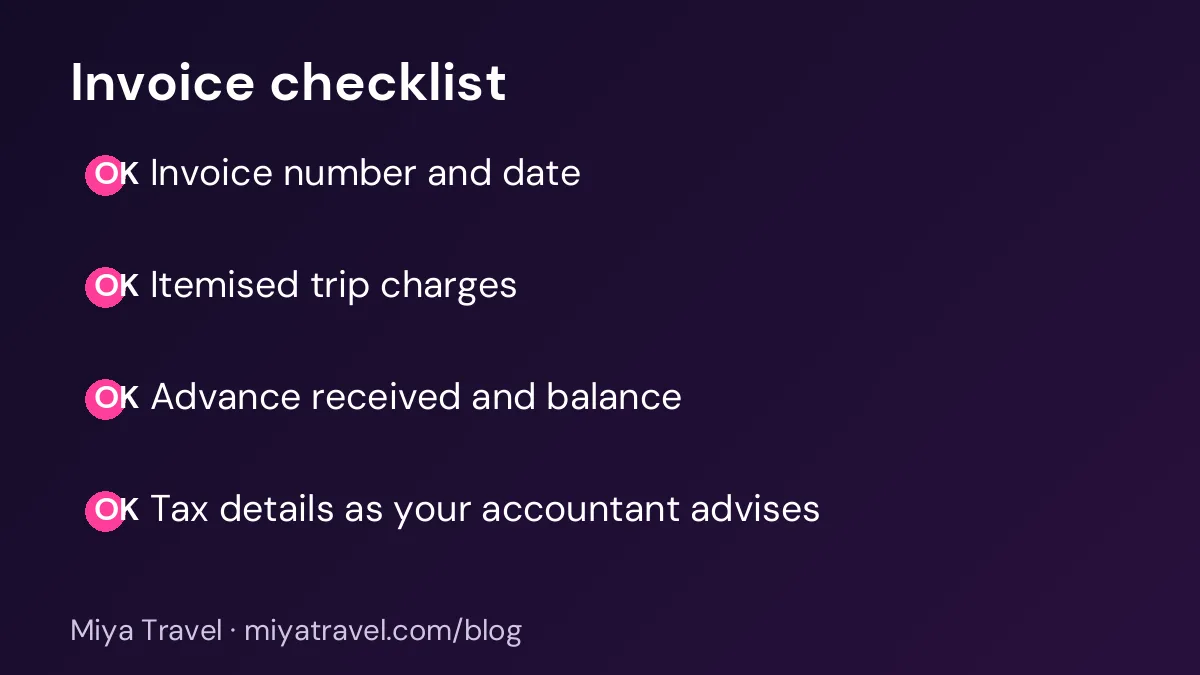
Start with the agency name, address and contact details. Include your business registration details as your accountant requires. Add the client name and billing address, and a unique invoice number with the date.
Then list the trip. Show the trip name, the travel dates, the number of nights and the travellers. Break the charges into clear lines, such as accommodation, transport, sightseeing, meals and any service fee. Show the subtotal, any taxes or service charges, the total, the advance received and the balance due.
Finally, add the payment terms and the bank details. State the due date for the balance and the method of payment. If the trip has a cancellation policy, include a short reference to it or a link to the full terms.
Show the advance and the balance on the invoice itself. A client who sees "Advance received: ₹ X, Balance due: ₹ Y, due on Z" is less likely to call and ask what is outstanding.
Numbering invoices correctly
Invoice numbers should be unique and sequential. Use a format such as a financial-year prefix followed by a running number, for example a number for each invoice in the year. Do not reuse numbers, and do not skip them without a record. Gaps in numbering can cause questions during an audit or a tax check.
Software can generate the number automatically, which avoids duplicates. If you use a spreadsheet, keep a single master list of invoice numbers and check it before each new invoice.
Creating an invoice from the booking
The best way to avoid errors is to create the invoice from the booking, not from a separate file. The booking already holds the quotation, the supplier costs, the payments and the trip dates. When the invoice is generated from the booking, the numbers match.
Check each invoice before you send it. Confirm the names, the dates, the number of travellers and the total. Compare the advance with the payment record. A two-minute check prevents a dispute that could take an hour to resolve.
Sending and recording invoices
Send the invoice as a PDF by email or WhatsApp, and save the copy on the booking. Record the date sent and the person it was sent to. If the client asks for a corrected invoice, issue a new invoice with a new number and note that it replaces the earlier one. Do not edit a sent invoice silently.
Keep a copy of every invoice for the period required by your accountant. Store them in a folder that the accounts person can access, so that year-end work is simpler.
Advance invoices and final invoices
Many agencies issue an advance invoice when the booking is confirmed, and a final invoice after the trip or before departure. The advance invoice shows the amount paid and the balance due. The final invoice shows the complete trip charges and the total paid.
Make sure the two invoices link to each other. The final invoice should refer to the advance invoice number, so the client and the accountant can follow the sequence.
Common mistakes
The first mistake is creating invoices in a word processor with no link to the booking. The second is reusing an old invoice template with the wrong dates. The third is missing the advance on the final invoice. The fourth is editing a sent invoice without issuing a new one. The fifth is sending an invoice before the quotation is accepted, which confuses the client.
Another mistake is leaving tax details out or using a format that your accountant does not accept. Confirm the required format before you set up the template.
Choosing invoice software
Look for a tool that creates numbered invoices from the booking, shows the advance and the balance, stores a copy with the booking and lets you issue a corrected invoice without losing the original. Ask the vendor to show an advance invoice, a change and a final invoice for the same trip.
Check whether the tool supports the tax treatment your business needs. Invoice rules depend on the type of service and your registration, so confirm with your accountant before you rely on any template.
If you need full accounting features, read our accounting software guide to see how invoices fit with ledgers and receivables.
A monthly invoice check
At the end of each month, check that every invoice has a payment or a due date. List any invoice without a payment after its due date. Confirm that the invoice numbers are continuous. Share the list with the accountant so that the books match the bookings.
Invoicing for changes after the trip starts
Changes do not always happen before departure. A client may add a day, upgrade a room or ask for an extra excursion while travelling. Each change needs its own invoice or an addition to the existing invoice, with a clear reference to the original booking. Issue the invoice promptly, while the details are still fresh, and send it to the client with a short note explaining the charge.
Agree with the client how they will pay for extras during the trip. Some clients prefer to pay the guide or the hotel directly, while others want an invoice from the agency. Make sure the arrangement is clear, and record the payment method on the booking. A payment made to the wrong party causes confusion and can lead to a second payment being requested.
Keep the original invoice and the extras separate, but link them together. This makes it easy for the client and the accountant to see the full cost of the trip, and it keeps the accounts accurate for the period in which each charge was incurred.
Using invoices to build trust
An invoice is a document the client reads carefully, especially when they are paying a large sum. Clear invoices build trust, and confusing ones create questions and delays. Use plain language for each line, avoid internal codes that the client does not understand and check that the total matches the quotation and the payments.
Include a short thank-you line and the agency contact details. A clear invoice that looks professional and is easy to read reflects well on the agency, and it encourages the client to pay promptly.
Frequently asked questions
What should a travel agency invoice in India include?
The agency details, client details, invoice number and date, trip details, itemised charges, taxes or service charges, advance received, balance due and payment terms.
How should invoice numbers be set up?
Use a unique, sequential number with a clear prefix, such as the financial year. Never reuse a number, and keep a master list.
Can I edit an invoice after sending it?
Do not edit a sent invoice silently. Issue a new invoice with a new number and note that it replaces the earlier one.
Should I issue an advance invoice?
Many agencies do. It shows the client what has been paid and what is still due, and it gives the accountant a clear record of the advance.
How do I avoid invoice mistakes?
Create invoices from the booking, check names, dates, travellers and totals before you send them, and compare the advance with the payment record.