
A hotel rate sheet is a single, dated list of the rates your agency pays for each hotel, room type, meal plan and season. Keeping it accurate, with validity dates and a clear review routine, prevents quotations from using outdated prices and protects the margin on every trip.
Many margin problems start with an old hotel rate. A quotation is prepared from a rate that was true last season, the hotel has since raised its price for the festival period, and the agency either absorbs the difference or asks the client for more money. A well-kept hotel rate sheet prevents this. It gives the team one dated list of rates, with the season, room type and meal plan clearly shown, so every quotation starts from current information.
This guide explains how to build a rate sheet, what to include and how to keep it accurate without spending hours each week.
Build one sheet for each city
Start with the cities you sell most often. For each city, create a list of the hotels you work with, their categories and the room types they offer. A single sheet for each city keeps the list manageable and makes it easy to compare hotels within the same destination.
Keep the hotel name exactly as the supplier writes it. Small differences in spelling can cause confusion when the voucher is printed, so use the official name from the contract or the rate card.
Record rates by season and room type
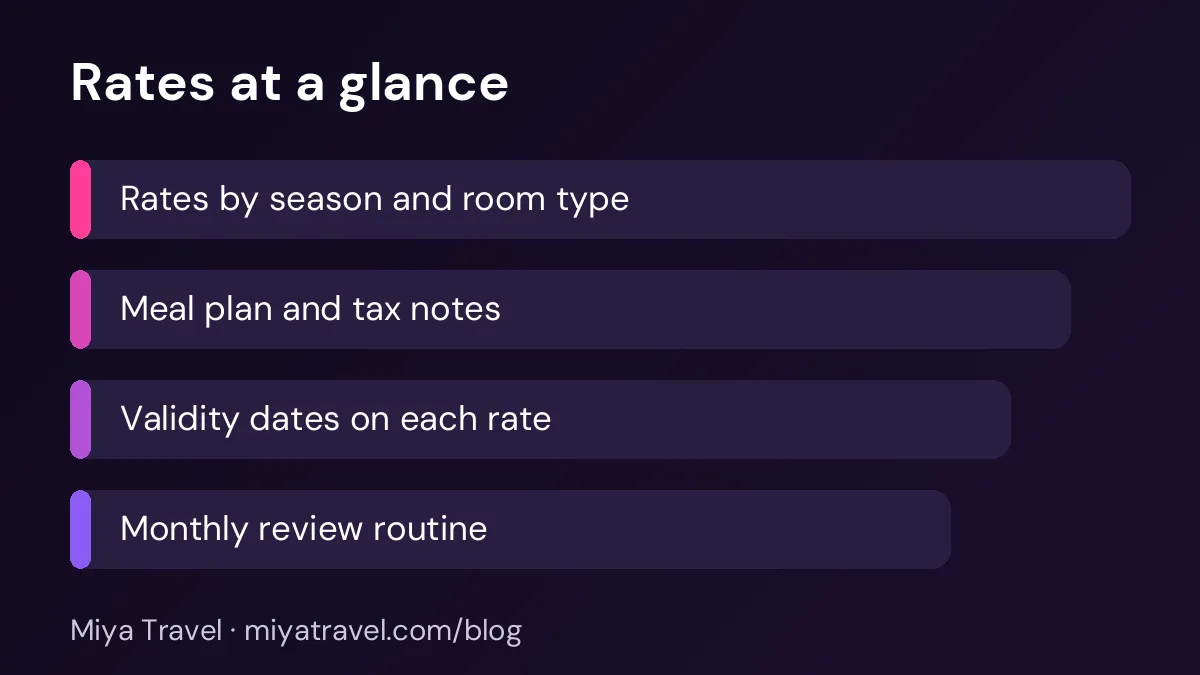
Each hotel should have rates for each season, such as off-season, shoulder season, peak season and festival periods. Within each season, record the rate for each room type: single, double, triple, family room or suite. Add the meal plan for each rate, such as room only, breakfast included, half-board or full-board.
Keep the rates in the same currency and state whether they include or exclude tax. A rate that looks cheap but excludes a tax can make the quotation wrong, and the client will feel misled when the final bill arrives.
Put the validity dates next to every rate. A rate without dates is a rate nobody can trust, because the team cannot tell whether it still applies.
Add the source and date of each rate
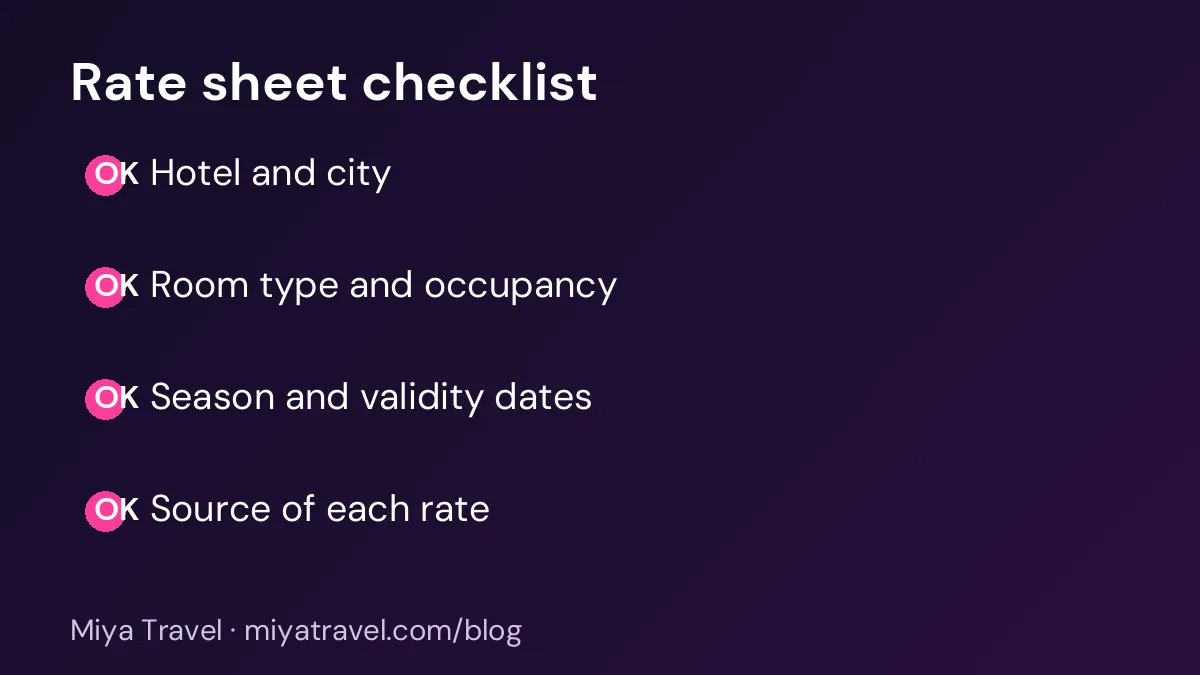
Record where each rate came from: the rate card, the email from the hotel, the signed contract or a phone confirmation followed by an email. Add the date you received it. When a rate is questioned later, the source and date tell you whether it was the current rate at the time.
Verbal rates are the riskiest. If a rate is given by phone, ask for written confirmation and record it. Do not quote from a verbal rate until it has been written down.
Keep the room types comparable
Room types differ between hotels, so the rate sheet needs a simple way to compare them. Use a standard label for each category, such as standard, deluxe, premium or suite, and add a note that explains the difference. A deluxe room at one hotel may be a different size or view from another hotel's deluxe room.
When you quote a client, use the room description from the hotel rather than the standard label alone. This avoids surprises at check-in.
Set a review routine
Rates change, so the sheet needs a routine. Review the high-volume hotels every month, and review the rest every quarter. Check the validity dates and update any rate that has expired. Ask hotels for their updated rate cards before each peak season, so you are not caught by a last-minute change.
Keep a note of any rate change and the date it took effect. This history helps you explain price differences to clients and check the margin on past bookings.
Protect your margin
Set a target margin for each hotel category. For example, a budget hotel may need a different margin from a luxury resort, because the cost base and the client expectations differ. Record the target in the rate sheet, and check each quotation against it.
If a rate change pushes the margin below your target, decide quickly. You can raise the client price for new quotations, negotiate with the hotel, offer an alternative hotel or accept a lower margin for a strategic reason. Make the decision before the quotation is sent.
Share the sheet with the team
The rate sheet is useful only if the whole team uses it. Store it in one shared place, and ask staff to quote only from that sheet. Remove old versions from shared drives and personal folders, so nobody works from an out-of-date copy.
Give each agent read-only access. Only the owner or a designated person should edit rates. This protects the sheet from accidental changes and keeps the source clear.
Common mistakes
The first mistake is quoting from an old version of the sheet. The second is missing the tax treatment, which changes the final price. The third is no validity date, so nobody knows whether the rate still applies. The fourth is a room type that is described differently in the quotation and the voucher. The fifth is no record of rate changes, which makes it hard to explain price differences later.
Another mistake is updating the rate in one quotation and not in the sheet. Every change should go into the master sheet first, then into the quotation.
Using a spreadsheet or a tool
A spreadsheet is enough for most small agencies. Use one tab for each city, with columns for hotel, category, room type, season, meal plan, rate, tax note, validity dates, source and date received. Add a conditional format that highlights rates past their validity date.
Some booking tools hold rates and link them to the quotation automatically. If you use a tool, check that it stores rates by season and room type, shows validity dates and keeps a history of changes.
Miya Travel supports quotations and itineraries, which can carry the hotel details into the client document. Check the quotations documentation for the current features and confirm any rate management you need.
A monthly rate check
Once a month, check the rates for the next two months against the validity dates. Ask the hotels for confirmation of any rate that is close to expiry. Update the sheet, and tell the team about any significant change. This short routine keeps your quotations accurate and your margins protected.
Negotiating better rates with hotels
A rate sheet is also a negotiation tool. When you know the volume you send to each hotel, you can ask for better terms. Track the number of room nights you book each year at each property, and bring that data to the annual rate discussion. A hotel that sees steady, growing business is more willing to offer a better rate or useful extras such as free upgrades when available.
Ask for more than the rate alone. Useful extras include a late check-out, a welcome drink for the group, a better cancellation window or a commission structure that rewards volume. Some hotels cannot change the rate but can offer added value, so keep a list of the extras that matter most to your clients.
Put every agreed term in writing and file it with the rate sheet. A rate agreed on a call and forgotten by the next season is one of the most common causes of margin loss. The written agreement becomes the reference for the team and for the hotel's own reservation staff.
Comparing hotels fairly
When you compare two hotels in the same category, use the same measures. Compare the rate for the same room type, the same meal plan and the same dates. A cheaper rate that excludes breakfast is not a better deal than a slightly higher rate that includes it. Create a simple comparison table for each city, showing the total cost per room night including meals and taxes.
Consider the service as well as the price. Track the complaints you receive for each hotel, the response time when you raise a problem and the quality of the reservation team's replies. A hotel that is slightly more expensive but reliable can save more money than a cheap hotel that causes repeated problems.
Update the comparison each season. Hotels change their standards, new properties open and older ones renovate. A comparison that was accurate last year may no longer hold.
Frequently asked questions
What is a hotel rate sheet?
It is a dated list of the rates your agency pays for each hotel, room type, meal plan and season, used as the source for every quotation.
How often should I update the rate sheet?
Review high-volume hotels monthly and the rest quarterly. Update rates as soon as a hotel changes them, and ask for updated cards before each peak season.
Should taxes be included in the rate sheet?
Record whether each rate includes or excludes tax, and show the tax treatment clearly. A rate that excludes tax must be quoted with the tax added.
What if a hotel gives me a rate by phone?
Ask for written confirmation, record the rate with the date and the source, and do not quote from it until it is in writing.
How do I protect my margin when rates change?
Check each quotation against your target margin. If a change lowers the margin, raise the price for new quotations, negotiate, offer an alternative or decide the margin consciously before sending.