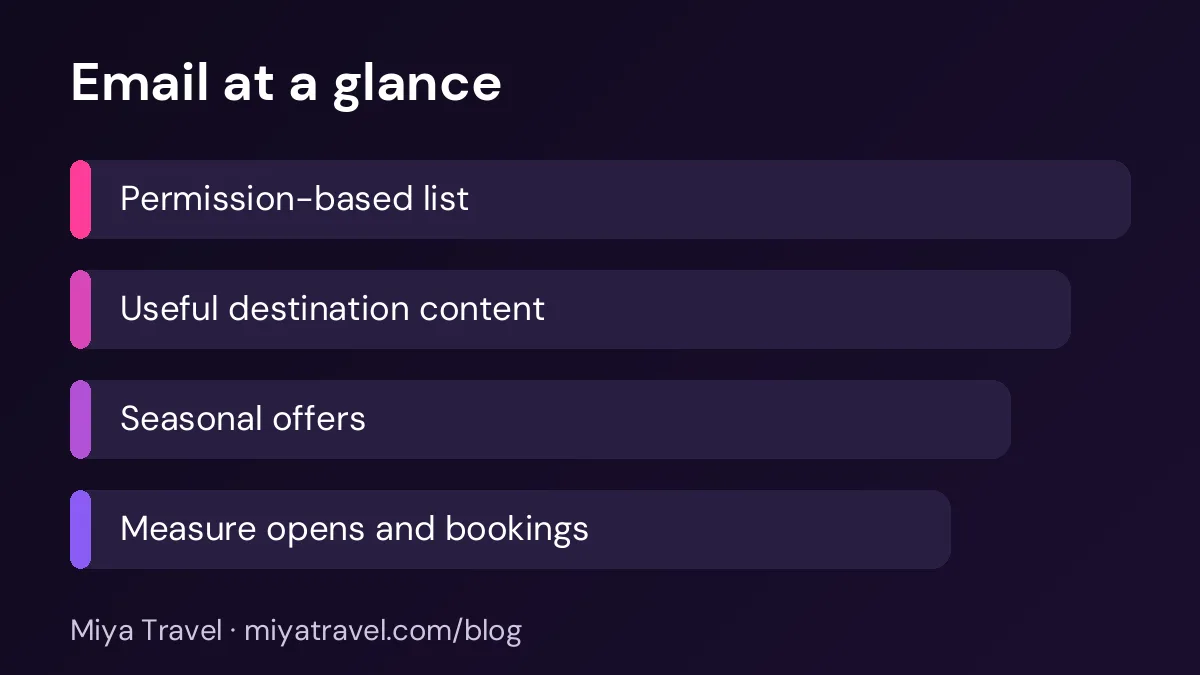
Travel agency email marketing works when the agency builds its list with permission, sends useful content such as destination guides and seasonal offers, and measures what gets opened and booked. It keeps past clients engaged between trips and brings repeat business without relying on paid advertising alone.
Email is one of the few marketing channels that a travel agency can own. The list belongs to the agency, the message reaches the inbox directly and the results can be measured. A well-run email programme keeps past clients interested between trips, reminds them of destinations they liked and brings them back for repeat bookings. A poorly run one annoys clients, gets flagged as spam and damages the agency's reputation. This guide explains how to do it well.
Build the list with permission
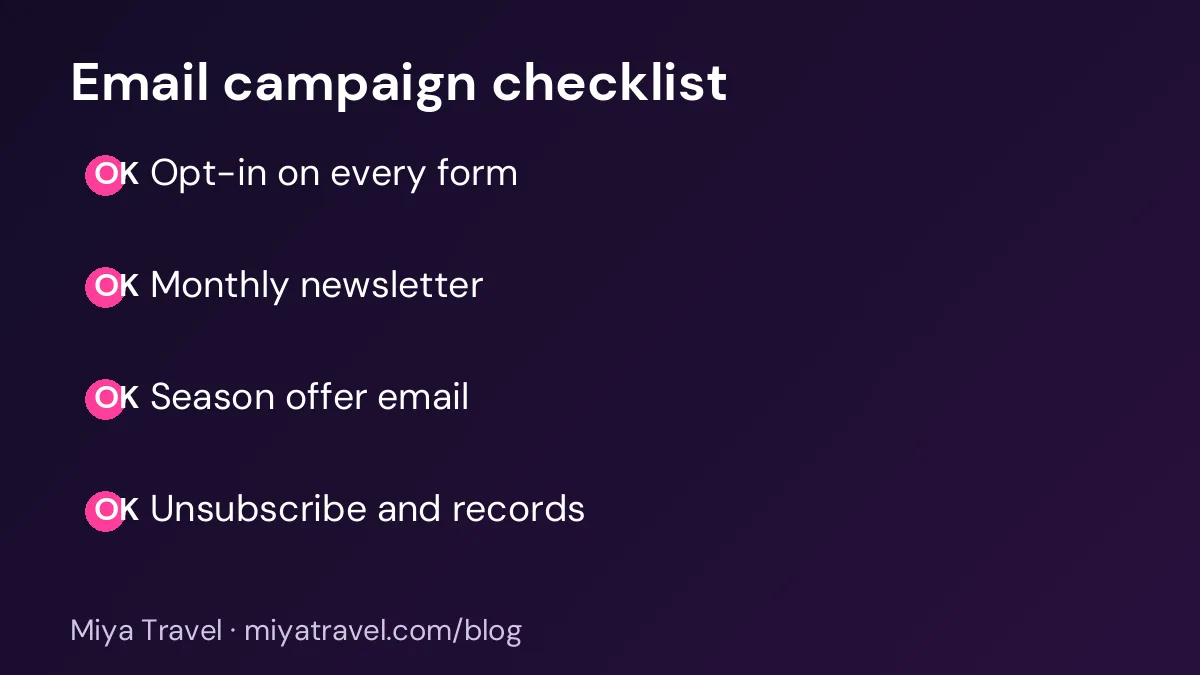
The list must be built from people who have agreed to receive your emails. Add a clear opt-in tick box to your website form, your enquiry form and your booking confirmation. Explain what the client will receive, such as a monthly newsletter and seasonal offers, and how often.
Do not buy email lists or add people who only gave you their phone number for a booking. Using contacts without permission breaks data protection rules and damages trust. A smaller list of people who want to hear from you is worth far more than a large list of people who do not.
Ask each client to confirm their email address once, and send a welcome message that explains what they will receive. A clear welcome message sets expectations and reduces unsubscribes later.
Decide what to send
A travel newsletter works best when it is useful. Destination guides, packing tips, visa updates, festival calendars and best-time-to-visit advice all give readers a reason to open the email. An offer is useful too, but it should not be the only content.
A simple monthly rhythm works well for most agencies. One newsletter with two or three useful articles, one seasonal offer and a short reminder about the next booking deadline gives readers something to look forward to without overwhelming them.
Write subject lines that people open
The subject line decides whether the email is opened. Keep it short, specific and honest. "Three quiet beaches to visit this winter" is more likely to be opened than "Our latest offers". Avoid capital letters, too many exclamation marks and claims you cannot support.
Test two subject lines when you send to a large list, and note which one gets more opens. Over time, you will learn what your readers respond to.
Make the content specific
Specific content feels helpful. A guide to a destination that names the best months, the transport options and two hotel categories is more useful than a general sentence about how beautiful the place is. Link to your own packages and quotation pages where they fit, so the reader can take the next step easily.
Keep each email to a few short sections. Use headings, short paragraphs and one clear call to action. A reader should understand the purpose of the email in five seconds.
Send seasonal offers carefully
Seasonal offers can drive bookings, but they must be honest. State the offer, the dates, the conditions and the booking deadline clearly. If the offer depends on a minimum group size or a set travel period, say so. A misleading offer damages trust and can cause disputes.
Do not send an offer for a package that is no longer available. Check the rate sheet and the availability before you send, and remove any offer that has ended.
Respect unsubscribes and records
Every email should include a clear way to unsubscribe. When someone unsubscribes, remove them from the list immediately. Keep a record of consent, so you can show when and how each person agreed to receive emails. This record matters for data protection, and your legal adviser can confirm the rules that apply to your agency.
Do not send emails to people who unsubscribed, even if they are past clients. Respect the choice, and keep the relationship open through other channels that they have accepted.
Measure the results
Measure three things for each email: the open rate, the click rate and the bookings that came from the email. Open rates show whether the subject line works. Click rates show whether the content is useful. Bookings show whether the email drives revenue.
Link each booking to the email campaign it came from, if your tool allows it. Without this link, you cannot tell which campaigns earn money and which only create interest.
Common mistakes
The first mistake is sending too often, which leads to unsubscribes. The second is sending only offers, with no useful content. The third is buying or adding contacts without permission. The fourth is an email with no clear next step. The fifth is sending an offer that has already ended.
Another mistake is ignoring replies. When a client replies to an email, respond personally and treat the reply as a lead or a follow-up task.
Connecting email to the CRM
Email works best when it is linked to your customer records. A past client who opened a destination guide for Ladakh may be the right person to contact when a Ladakh departure is available. Keep the email activity on the customer record, so the team sees the interest before the next call.
Check that your CRM can store consent, list the emails sent and show which campaigns led to bookings. If it cannot, a simple spreadsheet with the same information works until you outgrow it.
Miya Travel includes customer records and lead campaigns for travel agencies. Check the lead campaigns documentation and the customer records features to see what is available in your plan.
A simple monthly plan
Each month, plan one newsletter, one seasonal offer and one follow-up to past clients. Write the content in the first week, send it in the second week and review the results in the fourth week. Adjust the subject line and the content for the next month based on what worked.
This rhythm takes a few hours a month and builds a list that produces repeat business year after year.
Writing a welcome sequence for new subscribers
A new subscriber is most interested in your agency in the first week after they join. A short welcome sequence of three emails makes the most of this moment. The first email thanks them, explains what they will receive and gives a link to your most useful guide. The second shares a practical travel tip or a destination guide. The third introduces your team and invites a reply with a question about their next trip.
Keep each welcome email short. Two or three paragraphs, one link and one clear next step are enough. A long first email is less likely to be read, and the reader may unsubscribe before they see the value.
Let the sequence stop when the subscriber books or replies. A client who has started a conversation should move to a personal follow-up, not to a sequence of automated emails. Tie the sequence to the lead record, so the team knows when a subscriber becomes an active enquiry.
Test the sequence once a month. Check the links, the spelling and the unsubscribe option. Broken links in a welcome email create a poor first impression that is hard to repair.
Keeping the list healthy
A healthy list is one where people open the emails and click the links. Over time, some subscribers stop reading. Remove people who have not opened any email in a long period, after sending them one final message asking whether they want to stay. This keeps your open rate high and your sending reputation strong.
Watch for bounced addresses and remove them promptly. A high bounce rate can harm the delivery of your emails to everyone else. Check the list after each campaign, and correct any obvious typing errors in addresses where the client has given you permission.
Respect the preferences people give you. Some subscribers want only offers, some want only guides and some want only news about their destination. If your tool allows topic preferences, use them. A subscriber who receives only what they asked for is far less likely to unsubscribe.
Frequently asked questions
Can a travel agency email clients without permission?
Only in the ways your local data protection rules allow, and clear permission is the safest approach. Build your list with opt-in tick boxes and keep records of consent.
How often should a travel agency send newsletters?
Monthly is a good rhythm for most agencies. Seasonal offers can go out more often if they are timely and relevant.
What should a travel newsletter include?
Useful destination guides, practical travel tips, seasonal ideas and one clear offer or next step. Keep the content specific and short.
How do I measure whether email marketing works?
Track open rate, click rate and bookings linked to each campaign. Bookings show the real value of the email programme.
What should I do when someone unsubscribes?
Remove them from the list immediately and keep the unsubscribe record. Do not send further emails to that address.